.png)

%20(7).png)
Have you met Lisa? Lisa cares about your mission. She really does. She saw one of your stories online, clicked through to your website, read about the need, and even thought about giving. But then life moved on. Her inbox filled up. Your post disappeared from her feed. No one followed up in a way that helped her take the next step.
Lisa did not stop caring. She simply slipped through the cracks.
That is why a nonprofit communication system matters.
A nonprofit communication system is the structure that helps your organization move people from first connection to deeper trust, meaningful engagement, and long-term generosity. It is not just your email platform, website, social media calendar, direct mail appeal, or donor database. Those are tools. The system is how those tools work together to guide real people through a clear donor journey.
So what actually makes a nonprofit communication system healthy? At the center of the system and donor journey is a clear donor funnel (or a "donor pathway" as we call it here at Britespur). This is the “who” side of the system. Who are you communicating with? Where are they in their relationship with your mission? Are they discovering you for the first time, considering a gift, giving occasionally, becoming a recurring donor, or ready to become a deeper advocate?
Without that clarity, nonprofit donor communication becomes scattered. Everyone receives the same message, at the same time, in the same way. That may feel efficient, but it often weakens the connection. One of the signs your nonprofit is losing donor trust is when people stop opening emails, stop responding to appeals, or give once and disappear. Strong donor retention strategies begin by understanding where each donor is and what kind of communication will help build trust and, eventually, move them to take the next step along the pathway.
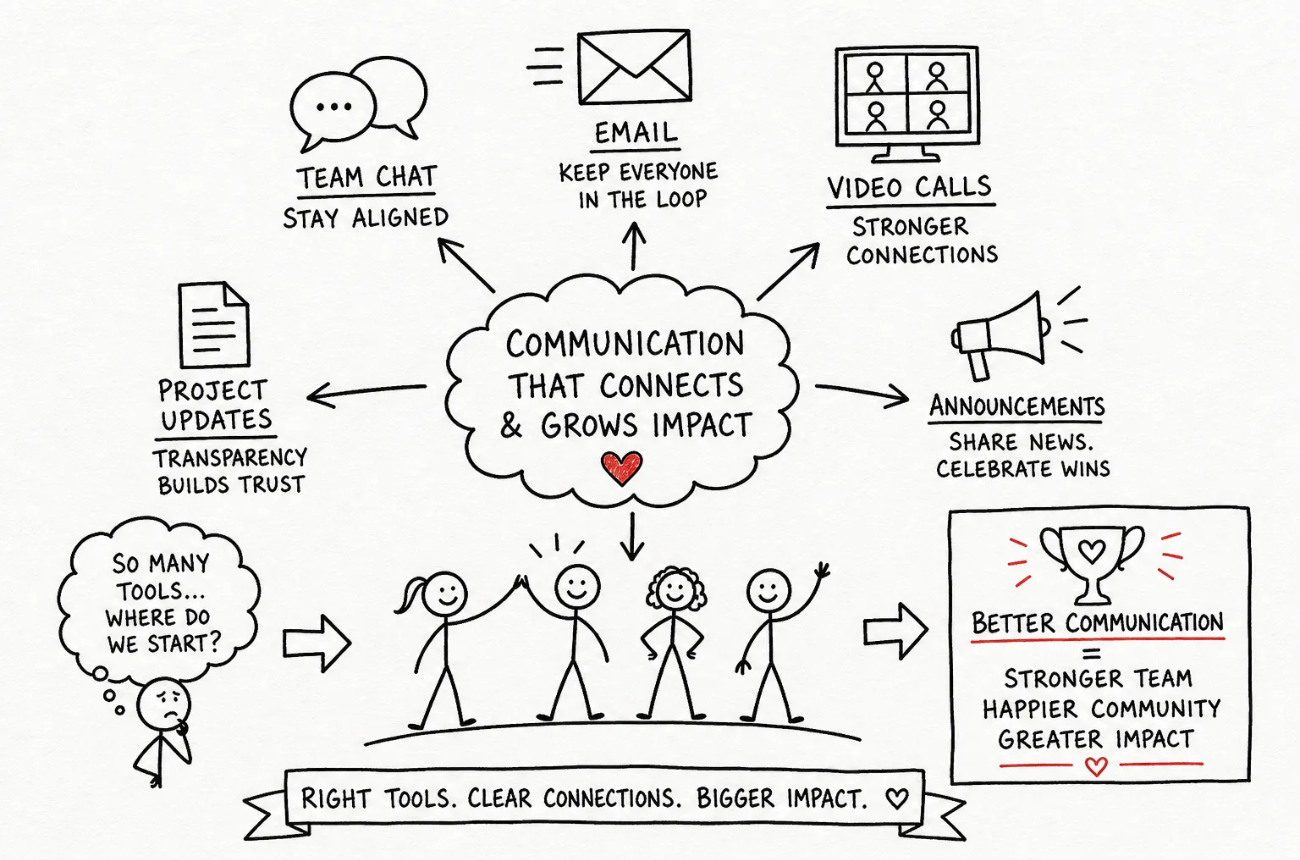
But knowing the “who” is only one part of the system. The next piece is the “how.” This is your communication channel strategy. A healthy donor engagement strategy does not rely on one channel to do all the work. Nonprofit email marketing matters, but so does Nonprofit Direct Mail. Your website, social media, phone calls, events, donor reports, thank-you notes, and personal follow-up can all have a role.
The question is not nonprofit email marketing vs. direct mail. The better question is: “How do these channels work together?” So they create a true omnichannel strategy rather than a collection of disconnected messages.
Let's return to our friend Lisa again. She first sees a story on social media about a family your nonprofit served. A few days later, she visits your website and finds a clear explanation of the need. Then she receives an email that connects the story to a specific opportunity to give. After making her first gift, she gets a personal thank-you note in the mail. Later, she receives a personalized impact update showing what her generosity made possible.
None of those touches is random. Together, they tell Lisa, “You matter here.”
That is what it means to build a donor communication system. The donor communication pathway identifies the right relationship stage. The omni-channel communication strategy delivers the right message through the right channel at the right time. If the pathway is unclear, your channels will feel noisy. If the channels are weak, even a good funnel will fail to build a connection. Both pieces must work together in tandem to create a truly healthy nonprofit communication system.
For community-driven nonprofit fundraising, this kind of clarity is especially important. Limited time, staff, and budget make scattered communication costly. A donor communication system for growing nonprofits helps reduce chaos, strengthen consistency, and make donors feel like they are truly a part of your solution.
In a time where nonprofits are expected to communicate everywhere at once, growing organizations need systems that help them see the whole picture, and their supporters, too. Not just the next email. Not just the next campaign. Not just the next appeal. They need to think in systems and connect the message, the donor pathway, the communication channels, the CRM, and the follow-up into one healthy structure.
Because nonprofit communication is not really about sending more messages. It is about building stronger relationships with the people who already care.
There are many people like Lisa already near your mission. The question is whether your communication system is ready to guide them from quiet interest to lasting stewardship.

Email: services@britespur.com
Monday - Friday | 8 AM - 4 PM